'The massed singing is a roar of pent-up emotions....irresistibly strong and unanimous' (Richard Morrison, The Times).Read the article here: Our prisons are in crisis. One remarkable charity is helping I’ll Fly Away is now available to buy as a digital download. Moved to tears by the singing of the men in HMP Dartmoor, Richard Morrison wrote ‘they aren’t just imagining these emotions. They have lived them.’ From dulcet, rich tones of Swing Low, Sweet Chariot to the plaintive Ain’t no sunshine and boisterous Folsom Prison Blues, this is one album everyone should have on their playlist. Featuring four of the finest professional musicians in the country I do hope you will consider buying a copy and supporting the Prison Choir Project. 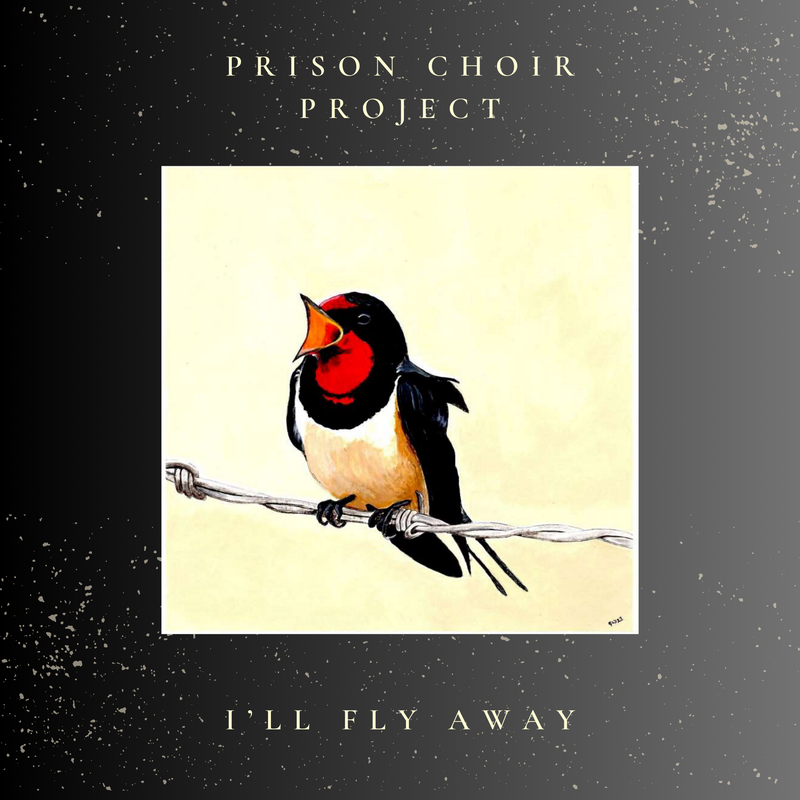
0 Comments
available as a digital download soon.......... “to connect with my soul after years of silence” Hugely proud of all those involved in bringing this album to fruition. Some astonishing work from four of the finest musicians in the world, professional artists Al Cherry (guitar), Dan Moriyama (keyboard), Sam Burgess (bass) and Johnny de’Ath (drums). This was one of those magic moments that come around once in a blue moon and my utmost gratitude goes to the men of HMP Dartmoor for their commitment to the Prison Choir Project, and their astonishing singing on this album. Thanks to the Governor, staff and chaplaincy of HMP Dartmoor, and to Jan Capiński and Joseph Porter-Bolger for their skills in recording and producing and album of such a high calibre. Rachel Billington - InsideTime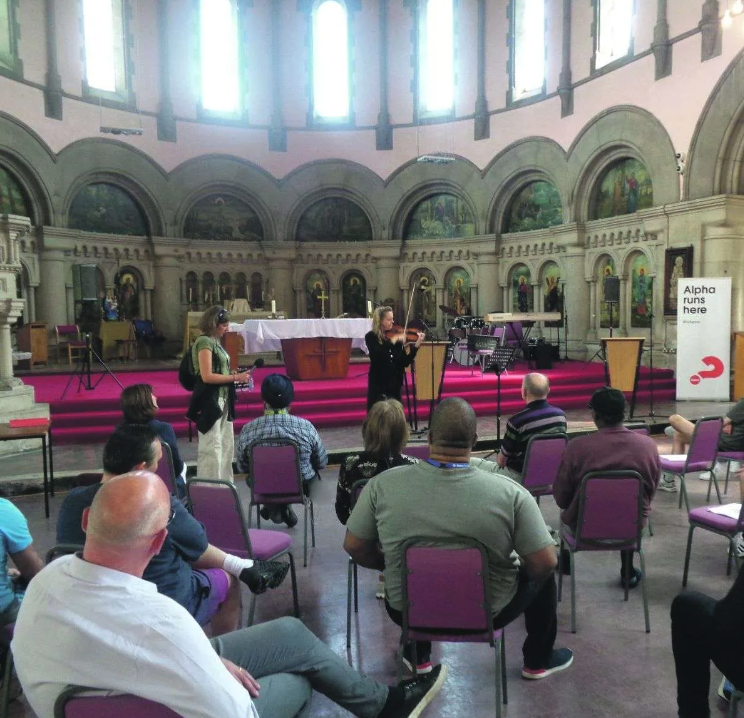 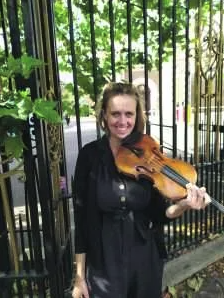 Violinist brings new sensations to Wormwood Scrubs prison – ‘A once in a lifetime experience’
A woman stands alone on the altar, turned stage, of Wormwood Scrubs’ magnificent chapel. She lifts a violin to her chin and begins to play. Folk tunes, easy listening, then suddenly the winter section of Vivaldi’s Four Seasons. But she isn’t only playing it; she’s reading the composer’s own stage directions: ‘a man walks on ice… he slips, falls to the ground,’ the music intervenes, ‘he’s back on the ice, running fast, ice breaks… the wind howls…’ ‘Living drama’ I may not have got the words quite right, they were written nearly three centuries ago, but the point is that Kerenza Peacock, the woman playing the violin, blonde hair tied out of the way with glittering strands, is turning music into a living drama. From that moment, the twenty men who wandered into the chapel are hooked. So are the rest of us in the audience, the chaplains, a few visitors like me, a few staff. We immediately realise this is something special. Perhaps the twenty men are less surprised because they are part of a group who have been taken up by the Prison Choir Project and meet regularly in the prison. It is run by Adam Green, a big kindly man, a professional baritone who set up the charity ‘to build connections between professional musicians, prisoners, ex-offenders … through the performance of opera, song and choral music.’ ‘Never the same again’ This visit from Kerenza and other high quality musicians is an extension of this. His opera work has included a production of ‘Carmen’ by Bizet in HMP Dartmoor. One older man who took part in this commented, “Take a group of dispirited, demoralized and devalued men called convicts. Persuade them they can join together in producing a famous musical extravaganza … Do it in a barren, famously grim setting known as Dartmoor Jail. Make it a thunderous success. That’s what the man from ‘outside’ did. He came among us one day with his passion for music… 3 weeks later we were in Seville helping to create those Spanish rhythms. We sang with Carmen, we tried to woo those achingly pretty ‘factory girls.’ We could feel the heat of the midday – and, yes, we had our day in the sun. Now the magician is gone … but we whom you inspired, we’ll never be quite the same again. Bravo, bravo, bravo.” Acoustic chamber So I suppose for Adam, inviting into the Scrubs an old mate from RADA days who has performed all over the world with some of the most famous orchestras and at the moment is based in Los Angeles where, among other gigs, she records film music such as Star Wars, was scarcely a challenge. He knew she’d entertain us. Following Vivaldi, we hear a piece from Bach, written after his wife died. The sadness of this is mitigated by the information that he married again a month later, although, as Kerenza points out, his twenty children obviously needed a mother. She describes Bach’s music as ‘a beautiful cathedral of sound which organises my brainwaves.’ Her next piece has an extraordinary story attached. She was in Egypt visiting the ancient pyramids and became determined to play her violin inside the King’s Chamber, perhaps even built as an acoustic chamber. Favourite piece Since taking an instrument inside the pyramid is forbidden, she smuggled it past the guard while her friend caused a diversion. Anyone who has been into those dark underground tombs (as I have recently) will know how awe-inspiring, if not fear-inducing they are. By the time Kerenza got to the final chamber, she was severely claustrophobic and hyper-ventilating. Quickly, she got out her violin and played the same piece she now plays for us, ‘Meditations’ by Massenet. Later, when I talk to some of the audience about their favourite piece, all pick this. Jermaine tells me he likes interesting music and rightly describes the Massenet as ‘very calming.’ Jah’one makes the same point when he links his liking of the piece to his own feelings of anger. Kerenza Peacock – “The power of music to heal” Old masters Throughout her performance, Kerenza, talks about the power of music to heal and before she starts to play some Mozart, tells us that French film star, Gerard Depardieu, who suffered from mental health problems, listened to the composer for that reason. She adds her own view that ‘the old masters knew something we’ve forgotten.’ Yet Kerenza also plays with pop groups and folk groups, so it seems music is embedded throughout her life in different guises. After a break she gives us some Dylan and the great song ‘Over the Rainbow’. She tells us ‘Music is a necessity, not a luxury,’ and I think we are all convinced. ‘Like a prayer’ Her final longer piece, the last music composed by Beethoven before his death and originally part of a string quartet, was chosen as one of the objects put in a capsule and sent to space. ‘Like a prayer’ as Kerenza says. It would certainly give a positive impression of this earth to any aliens out there. The audience give me more of their reaction: Bill describes the performance as ‘so emotional’, Steffon refers to ‘the drama of the moment’, Tyrell comments, ‘she’s very passionate.’ ‘Therapeutic’ is the word most used. Logan tells me about his sister who played Mozart to her bump with both her pregnancies and now both children are talented musicians as well as being part of Mensa. Kerenza has only one small weakness: she can’t play by heart the music from the film, The Titanic, as requested. Instead, we get Bobby Shafto – a positive swap in my view. As ‘K’ comments to me, ‘It was wonderful… a once in a lifetime experience.’ So my advice to you: if you hear about the Prison Choir Project coming your way, sign up at once.  Looking forward to speaking at the Festival of Chichester on 12th June: festivalofchichester.co.uk/event/event-sw2-finding-harmony-behind-bars-the-prison-choir-project/ "Adam Green shares with us his work in prisons, some of the characters he’s met along the way, and outlines the charity’s mission to develop self-confidence, self-belief and self-determination to succeed through music, offering a way to reduce the possibility of reoffending. It promises to be an exciting, uplifting and inspiring session with live recordings from within, for example, Dartmoor Prison." On Tuesday 28th Feb 2023, the charity is holding what they hope to be their biggest fundraiser ever at the China Exchange on Gerrard Street in Soho. It’s set to be an entertaining evening of music performed by the now legendary 'Pros and Cons,' food and wine, and speeches from former inmates along with the charity’s founder, Adam Green. Darren, a former Dartmoor prison inmate, took a lead role in West Side Story - a musical put on by the charity inside the walls of the prison. Since then, he has been back to work with the Prison Choir Project, commenting: “I am absolutely overawed at how happy I was for signing up! In the 15 years I’ve spent behind bars this is one project that I would do again and again. I found it helped myself belief, self-worth, self-confidence, it eased my PTSD and it stopped my craving for illicit drugs." Speaking on the event, Adam Green, Founder, The Prison Choir Project said: We’re really looking forward to our fundraising event later this month. It’s a chance for people to truly see and hear about the long-lasting impact the charity has. Every penny raised will go directly towards our work in Prisons. This is a busy year for us, in which we hope to stage an opera Billy Budd, by Benjamin Britten, record and release an album with the men of HMP Dartmoor and begin a new collaboration with Wormwood Scrubs, working on a weekly basis within the prison.” To sign up for the event and support The Prison Choir Project, visit https://www.eventbrite.co.uk/e/prison-choir-project-fundraiser-tickets-547470227187  This week is Prison Music Week!
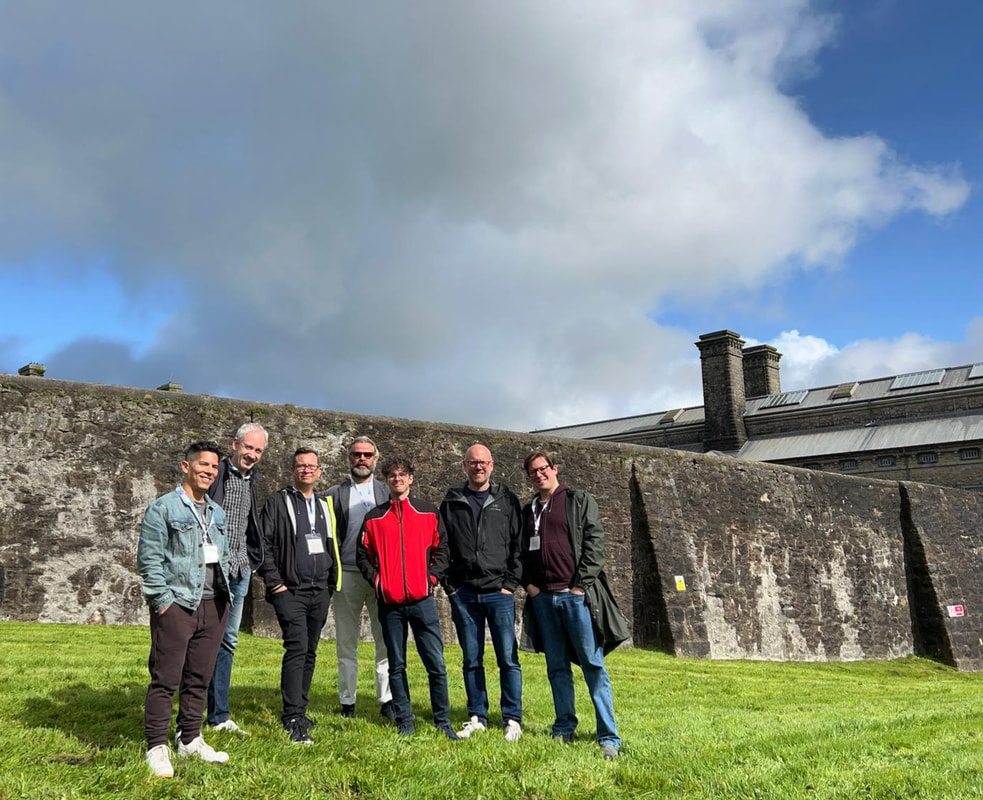
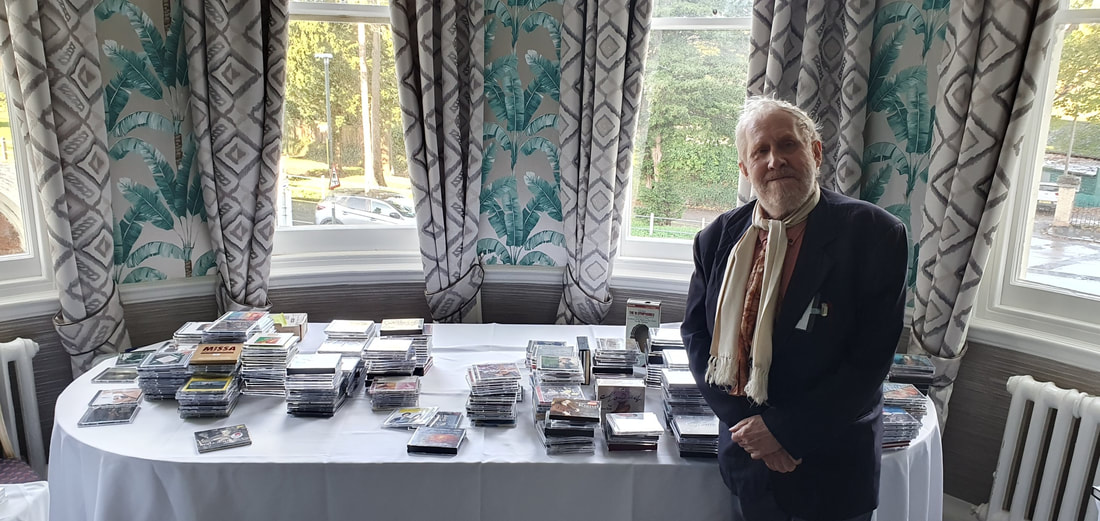
Introducing the Jan Jail Jam: a national celebration of the power of music in prison! From 23rd - 30th January, prison music charities are getting together to put on music events in prisons up and down the country. Beating Time, Sing Inside, Changing Tunes, Music in the Ville, Finding Rhythms, Prison Choir Project, The Irene Taylor Trust, and more, will be showcasing the huge variety and quality of music being made in our prisons. Music is a life line for many inside. It takes all forms: choirs, bands, instrumentalists, song-writing, to name a few. Much of it gets recorded or performed for other people serving sentences, their families and support networks. Music brings people together. It enables us to express deep, shared emotions. When we perform for others we prove to ourselves and to them that we have something to give and we have worth. Music also improves mental health and creates a strong sense of social inclusion. Some of us go in every week, year-round, to build musical communities in prison. We become assets the prison can use. We sing and play at everything – from celebrations to funerals. Some of us do short intensive ambitious projects, perform original songs, write and record albums, put on operas and musical theatre productions. Whatever the medium, music has the power to transport, sooth, heal and hold us. Why Prison Music Week? Covid silenced all music in our prisons for over two years. Many of us provided in-cell activities remotely but this was not the same. What was missing was the connection between people making music together, the palpable energy in a room and watching people’s confidence and spirits lift week by week. We want 2023 to be a celebration of community music - a reminder that the arts and creativity hold great value not just to individuals, but wider prison life. From the wealth of academic evidence, to prime time television shows on choirs, we all know group music-making reduces stress, builds positive relationships and improves mental health. This is more important than ever in prisons - over 50% of the population are reported to have mental health issues. So why now? Because at last we can! We want to support the people who live and work in prisons. The mental health crisis affects all of us, not just those in their charge. And we want to remind others – loudly – that in a climate where budget cuts and staff shortages mean huge pressures on resources, that the arts, and in particular making music together, matters. We must continue to make creative activities accessible in prison for the wellbeing of people serving sentences and the prison community as a whole. We all have the experience and evidence to show that music helps to reduce stress, violence and self-harm in prison, while also creating aspiration and hope. What are we doing? As small organisations, we are banding together to support each other and raise awareness of all the music projects happening across the prisons we work in. All week our music directors and musicians in residence will be delivering choir sessions, instrument lessons, song-writing workshops, collaborative performances, and more! We will be sharing our events across social media, in print and on radio stations in prison and out. We want this to be the first of many annual Prison Music Weeks. And we hope this will continue a much needed conversation to amplify the importance of music and creativity in our prisons. Please support us! A huge thanks to the Chairman John Isaac, to Maureen Greenhouse, Ian Bailey, Ken Geen, Kevin Ryland (pictured) and the friends of Torbay Music Society for their kind invitation to talk about music in Prisons at the Torbay Musical Weekend. I doubt my story read as well as a novel by Agatha Christie, or was as funny as Peter Cook, and I’m certainly not as pretty as the supermodel Lily Cole, nevertheless it was a pleasure to follow in the footsteps of these notable Torbay alumni. I started by outlining why I believe singing to be exceptional in its ability to draw people and communities together, a common thread, a connectivity that binds and connects us all no matter our background, social status, career, or interests, and that connectivity - something that social media and the internet would have us believe is a tool that brings us all together - is at an all time low. I had the opportunity to play a number of sound clips of the lads singing in HMP Dartmoor alongside the King's Singers, and Rupert Bedford's video "Sounding Redemption"; also the video documenting our Carmen project back in 2017 - how lovely to once more listen to the response of the professional artists and inmates. "It's not going to cure my arthritis but it puts a poultice on the Soul" - who could forget the wonderful Nick and his craft. I miss all those boys who are now free and wish them well.
I'd like to thank the Friends of Torbay for their incredibly kind donation of CDs which I look forward to dropping off within prisons this side of Christmas. I filled the back of the car with well over 300 so there will be plenty to listen to. We are building libraries for inmates - if you've any CDs you're looking to offload do get in touch. I ended the talk saying that for us it’s all about connectivity - a light at the end of the tunnel, a slither of hope in a bleak environment. Let us not forget: From mid-March 2020 until around February 2021 almost all people in prison (80,000) in the UK spent 23 hours or more out of every day locked in a cell, typically around 3m by 2m in size. Two-thirds of them have been in conditions that amount to solitary confinement, the other third are sharing a cell. A joint inspectorate report released in May 2022 found that recovery in prisons has generally been slow and inconsistent, with little progress made to improve time out of cell, which is far below prepandemic levels. If you invest in, encourage and believe in an individual the chances are he/she will repay you bucket loads. This is where we are getting it wrong in society and it’s not all about throwing money at a problem. It’s that investment, in the individuals that have been side-lined from society that we wish to make. An investment in HUMAN capital. “It is said that no one truly knows a nation until one has been inside its jails. A nation should not be judged by how it treats its highest citizens, but its lowest ones.” Nelson Mandela "Cooped up in this narrow cabin I have beheld the mysteries of goodness. And I am afraid." Billy Budd is an opera by Benjamin Britten to a libretto by the English novelist E. M. Forster and Eric Crozier, based on the short novel Billy Budd by Herman Melville. The opera received its premiere at the Royal Opera House, London, on 1 December 1951. This video is a momentary reflection on a week's collaboration between professional artists and former Prison inmates, working on Benjamin Britten's Billy Budd at the Stone House in Lewisham, London. With permission from Boosey & Hawkes, the work has been arranged for 6 instruments including harmonica, accordion and trumpet, and is the first step in our journey towards staging a full production in HMP Dartmoor. With thanks to the following for their time and commitment to this project: Paul Hopwood, Charlie Johnston, Ben Nelson, Tim Mirfin, Welsh Andy, Zivorad Nikolic, Clare Findlater, George Sleightholme, Nancy Johnson, Angela Whelan, Angus McCall, Neville Stanford, Max Pappenheim, Stevie Higgins, Daisy Evans, George Nick Chron and Yvonne Horsfall Turner. 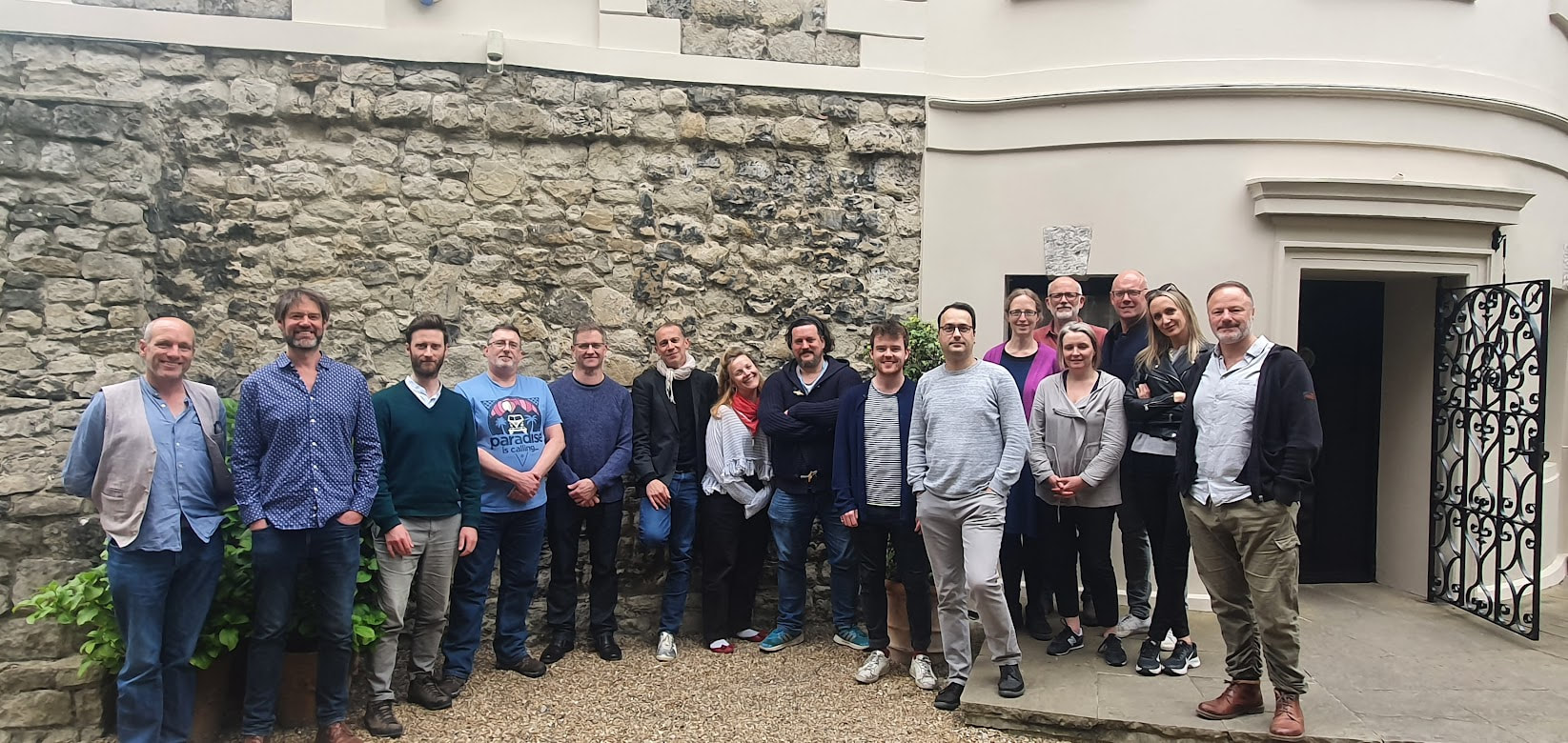 Billy Budd - a brief synopsis: The opera begins with a prologue in which Captain Vere, an old man, ponders the significance of events that took place long ago on board the British naval vessel HMS Indomitable in 1797. Three new sailors, press-ganged from a passing merchant ship, are brought on board, including Billy Budd, a young, strong and handsome recruit. Billy's goodness wins the hearts of all except Claggart ('a depravity according to nature'" and the ship's Master-at-arms), who determines to destroy him. Claggart encourages Squeak to rifle through Billy's belongings, but he is caught by the young sailor. Dansker warns Billy that Claggart has it in for him. Claggart then encourages the Novice — cowed into submission by an earlier beating — to bribe Billy into supporting mutiny, but to no avail. Nevertheless Claggart takes a complaint to Vere, interrupted in his accusation by a brief skirmish with a French frigate that ends with the enemy escaping. Claggart then accuses Billy, who is called in by Vere to defend himself. His stammer, however, silences him, and he knocks Claggart down with a single blow that strikes him dead. At the court martial, Vere fails to speak up for Billy, who is condemned. He goes to his death with Vere's name on his lips. In the Epilogue, we return to the aged Vere, who again scrutinises his role in these events. Why Billy Budd? Billy Budd is primarily concerned with a simple moral question: what happens when the law tells us to do something that, in every possible way, seems wrong? With themes of good versus evil, morality, truth and the physicality of confinement, what better place to explore these themes than in a prison environment: "Cooped up in this narrow cabin I have beheld the mysteries of goodness. And I am afraid." In collaboration with HMP Dartmoor, the PCP proposes to stage a production of Britten’s opera Billy Budd with a diverse cast of 35 inmates who will perform lead roles, sing in the chorus and design sets alongside prison staff and professional singers, directed and coached by a highly- skilled creative team.  DONATE A DISC? Let's build a library of music for inmates.
I cannot imagine the horror being faced by inmates in prisons at this time - no visits, no education, no gym, 24/7 lockdown in a bleak cell. Perhaps we can make their lives a little better - do you have any old CD's (you know, those round rainbow colour things that used to go into cd players??). Perhaps you'd help me BUILD A LIBRARY of music for inmates. Could you donate a couple from your back catalogue all you musicians?? Please pass the word, share this with your friends and if you're having a clean out send your old cd's to the Prison Choir Project, 38 Westbridge Road, London SW11 3PW. THANK YOU !!!!!!!!!!!!!!!!!!!!!!  The King’s Singers, under the umbrella of their charity, The King’s Singers Global Foundation, are delighted to announce a new outreach programme with three UK-based charitable organisations - Soundabout, The Prison Choir Project and Together Productions. These three charities will become ‘Ambassadors’ for the group’s all-encompassing new mission, Finding Harmony, which aims to demonstrate how music brings people together all over the world.
The Ambassadors, each of which will each receive a donation from The King’s Singers Global Foundation, will also take part in workshops with the group, culminating in a celebratory Finding Harmony concert and party in London on Friday, 29 May 2020. Commenting on the Ambassadors, The King’s Singers said: “Finding Harmony is a mission close to our hearts. We are aiming to show how singing brings people together, as it has done for thousands of years, at times of discourse and celebration, in war and in love. The work of our chosen Ambassadors mirrors the spirit of Finding Harmony, by finding ways to improve lives and bring people together, so the partnerships are a really exciting opportunity for us to get involved and make a difference to people’s lives in our own small way.” The King’s Singers ‘Finding Harmony Ambassadors’ cover a broad and extraordinary range of initiatives as follows: Soundabout is a charity that uses music to empower and unlock the potential of people with severe and profound learning disabilities. Their multi-sensory music-making techniques help to stimulate communication, learning and self-expression, enabling people who may be unable to hold an instrument or speak to make their own unique contribution; The Prison Choir Project aims to help rehabilitate prisoners by improving mental, physical and social wellbeing through music. Through music — particularly singing — they aim to provide a pathway towards a reduction in reoffending, and an improvement in confidence and employability for inmates; Together Productions runs several projects which all aim to bring together disparate communities in the shared language of singing. Their community choir, ‘The Mixed Up Chorus’, brings together people of different faiths, ages, and backgrounds for regular rehearsals and performances. Their project ‘Singing Our Lives’ is an initiative which supports migrants and refugees to share their life experiences by writing songs. |